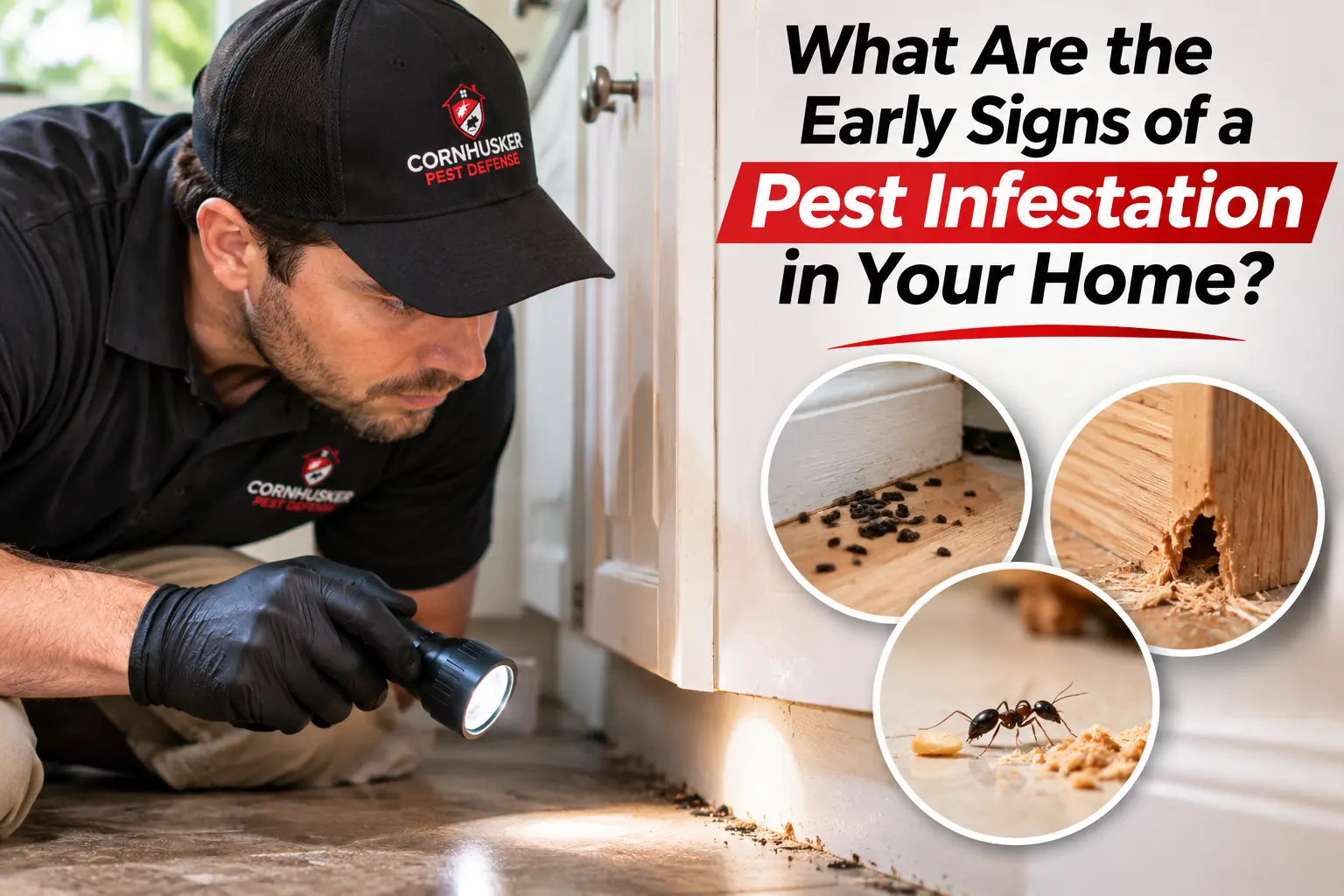
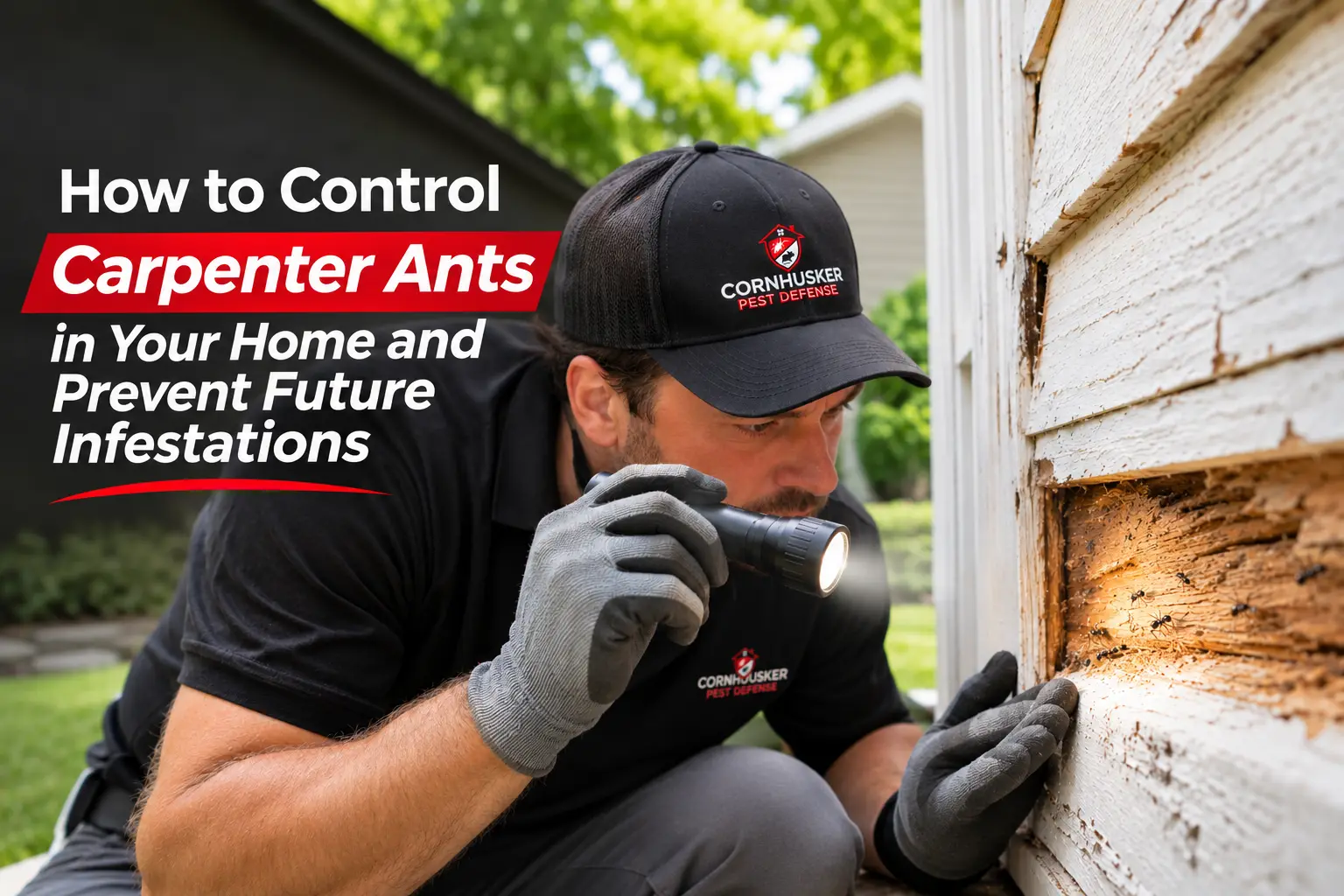
You might spot a few large ants in your kitchen, bathroom, or near a window, only to find more in the same places a few days later. If you’re wondering how to control carpenter ants, start by tracking their trails to find possible nests, removing accessible infested wood, and using suitable treatments to reach the colony. Fixing moisture problems and sealing entry points can also help prevent another infestation. Simply killing the ants you see usually isn’t enough. Carpenter ants can nest outdoors or inside hidden spaces in your home. They don’t eat wood like termites, but they dig tunnels through it to make room for their colonies.
This guide explains how to recognize their activity, deal with existing nests, choose practical treatment methods, and make your property less inviting to them.
What Are the Signs of a Carpenter Ant Infestation?
One large ant walking across your floor doesn’t necessarily mean there’s a colony inside your house. Carpenter ants often travel indoors from nearby trees or outdoor nests while searching for food. However, seeing them regularly, particularly around wooden structures, may indicate a problem worth investigating.
In Nebraska, black carpenter ants are among the most common types. They are generally larger than many household ants, although worker sizes vary. Some carpenter ant species also have reddish coloring, so identification shouldn’t depend on color alone.
Watch for these signs:
- Repeated ant activity: Large ants appearing around windows, bathrooms, kitchens, or wooden trim, particularly during the evening.
- Piles of wood shavings: Carpenter ants push coarse, sawdust-like material called frass out of their nesting galleries. It may contain dead insects or ant body parts.
- Winged ants indoors: A group of winged carpenter ants emerging from inside a building can indicate an established colony.
- Faint sounds inside wood: Some active nests produce soft rustling noises, although these can be difficult to hear.
- Smooth tunnels in wood: Exposed carpenter ant galleries have clean, smooth surfaces rather than the mud-filled areas often associated with subterranean termite damage.
Pay attention to where and how often these signs appear. Fresh wood shavings collecting beneath the same window or beam are more concerning than an occasional ant passing through an open doorway.
Important: If you find damaged wood but aren’t sure which insect caused it, avoid making repairs until the area has been properly inspected. Carpenter ants and termites require different approaches.
What Attracts Carpenter Ants to Your Home?
Carpenter ants look for protected nesting spaces and nearby food sources. They feed on insects, sugary substances, and other available foods, but wood is used for shelter rather than nutrition. Damp or softened wood is particularly attractive because it’s easier to excavate. A leaking window, damaged roof edge, or plumbing problem can create conditions that make parts of your house suitable for nesting.
However, carpenter ants aren’t limited to wet wood. Established colonies may also occupy dry structural wood, insulation, or existing hollow spaces. That’s why a dry-looking room doesn’t automatically rule out a nearby nest.
Where Do Carpenter Ants Usually Build Their Nests?
Many colonies begin outdoors in dead tree limbs, stumps, logs, or wooden posts. As a colony grows, some workers may establish additional nesting areas called satellite nests. These can be located inside a house even when the main colony remains outdoors.
Common nesting locations include:
- Wooden window and door frames
- Wall voids and hollow doors
- Roof edges, attic spaces, and eaves
- Wood beneath decks and porches
- Damp areas near plumbing
- Old stumps, fence posts, and landscape timbers
A useful clue is the path ants take between the house and yard. Ants entering through an upstairs window, for instance, may be traveling along a nearby tree branch rather than coming from inside the wall.
Understanding the possible nesting location helps you decide where to inspect before attempting treatment.
How to Control Carpenter Ants in Your Home
Carpenter ant control works best when you deal with the nesting sites rather than individual workers. The right method depends on where the colony is located, whether the wood can be safely removed, and how easily the ants can be reached. Begin with a careful inspection. Avoid disturbing suspected nests immediately, since observing the ants may give you useful clues about where they’re coming from.
Track Carpenter Ant Trails to Locate Their Nests
Carpenter ants are often more active at night during warmer weather. Watching their movements after sunset can help you find routes that aren’t obvious during the day. Take a flashlight and check places where you’ve already noticed activity. Look along baseboards, behind appliances, around plumbing, and near exterior walls. Outdoors, inspect tree trunks, fences, and the edges of walkways.
Try this simple method:
- Find an area where carpenter ants appear regularly.
- Watch their movements without interrupting the trail.
- Follow ants traveling away from a food source.
- Notice where they disappear into wood, cracks, or outdoor objects.
- Mark or photograph suspicious locations for a closer inspection.
If you’re having trouble finding a trail, check again later in the evening. Activity can change with temperature and weather, so one unsuccessful observation doesn’t mean the ants have disappeared.
Remove Accessible Infested Wood and Nesting Materials
When an active nest is found inside a loose log, old board, or other removable outdoor material, getting rid of that nesting site may be a practical control step. Start with items that aren’t attached to your house. These might include abandoned lumber, decaying landscape timbers, or a small piece of wood containing an active colony.
Before moving anything, make sure the ants are actually nesting inside the material. Ants walking across a wooden board might simply be using it as a pathway.
For accessible, non-structural items:
- Check for nesting galleries or ants emerging from openings.
- Wear gloves and avoid breaking the material apart unnecessarily.
- Arrange for the infested material to be removed and disposed of appropriately.
- Check the surrounding area for continued activity.
Don’t dismantle wooden framing, floor supports, or load-bearing components. Suspected structural damage needs proper evaluation before repairs begin. Removing one infested object may solve a small outdoor nesting problem, but a mature colony can have other nesting locations. Continue observing the property afterward to check whether activity has stopped.
Use Carpenter Ant Baits Along Active Trails
Ant baits offer another possible control method, particularly when the nest cannot be easily reached. Instead of killing ants immediately, a slow-acting bait is intended to be collected by workers and shared within the colony.
The difficulty is that carpenter ants don’t always accept bait. Their food preferences vary, and they may ignore a product even when they’re active nearby.
If you’re considering bait:
- Choose a product specifically labeled for carpenter ants and the intended location.
- Place bait near active trails according to its instructions.
- Keep stations away from children and pets.
- Check whether ants are actually feeding on the bait.
- Follow the label for replacement, monitoring, and disposal.
Don’t apply contact sprays around bait placements. Spraying can discourage ants from using the bait and interfere with the treatment. Give an accepted bait time to work according to the product instructions. If the ants repeatedly ignore it, changing products without understanding their behavior may waste time.
Nebraska Extension cautions that carpenter ant baits are often unreliable because these ants have a varied diet. Treat baiting as a possible option, not a guaranteed way to eliminate every colony.
Treat Hidden Indoor and Outdoor Carpenter Ant Colonies
Some nesting sites are too difficult or unsafe for homeowners to access. Carpenter ants may occupy wall cavities, attic framing, hollow doors, or spaces inside trees that can’t be reached without special equipment. In these situations, treatment needs to match the location of the colony. A nest inside a tree cavity may require a different application from one inside a building.
Targeted insecticide products can be effective when applied correctly to identified nesting areas. However, not every product is suitable for every location, particularly concealed spaces containing insulation, wiring, or other sensitive materials.
Avoid drilling into walls or applying pesticides inside electrical openings yourself. These areas may require professional equipment, appropriate product selection, and careful application. If the nest remains inaccessible, a qualified technician can assess the situation and determine whether targeted treatment or another approach is appropriate.
How to Prevent Carpenter Ants From Coming Back
Once the active infestation has been addressed, look at the conditions that made your property attractive to carpenter ants. Prevention is mostly about keeping vulnerable wood in good condition, reducing easy access from outdoors, and noticing early warning signs before another colony becomes established.
Fix Moisture Problems and Remove Damaged Wood
Water damage is one of the most useful things to check around your home. A small plumbing leak or poorly draining gutter can keep wood damp long enough to create a suitable nesting area. Walk through rooms where water is regularly used, then inspect exterior areas exposed to rain. Look for water stains, peeling paint, soft trim, or wood that stays damp after the surrounding area dries.
Make these repairs a priority:
- Fix leaking pipes, faucets, and roof sections.
- Clear clogged gutters and improve drainage.
- Address damp conditions in crawl spaces.
- Repair damaged window and door seals.
- Replace rotten or badly deteriorated wood after assessing the damage.
If you’re replacing an affected wooden part, correct the moisture source first. Otherwise, the new material may develop the same problem.
For wooden beams, joists, or other structural components, arrange a qualified assessment before removing anything. Some damage may be hidden beneath the surface.
Seal Entry Points and Maintain Your Yard
Even when ants nest outdoors, small openings can give them access to kitchens, bathrooms, and other indoor spaces. Check exterior doors, windows, utility pipe openings, and cracks around siding. Seal suitable gaps with appropriate materials, and replace damaged weatherstripping or screens.
Yard maintenance also makes a difference. Focus on these tasks:
- Trim tree branches and shrubs touching the house.
- Store firewood off the ground and away from exterior walls.
- Remove unnecessary wood piles and abandoned lumber.
- Check old stumps and landscape timbers for ant activity.
- Keep wooden siding and trim from direct contact with damp soil where possible.
Branches touching the roof can provide a direct route for ants traveling from outdoor nests. Cutting back these connections makes it harder for them to reach upper parts of the house.
You don’t need to strip your yard of every wooden feature. Regularly inspecting vulnerable materials and keeping the area around your house maintained is a more sensible approach.
How Professionals Handle Carpenter Ant Infestations
Carpenter ants can be difficult to manage when they keep appearing despite basic home treatments. Fresh wood shavings, ants emerging from wall openings, or repeated activity in the same room may suggest a hidden nesting site that needs a closer inspection. A pest control technician starts by identifying the ant species and examining where the insects are traveling. They check areas such as window frames, roof edges, crawl spaces, damp wood, and nearby trees. Following active trails and checking for moisture damage can help them narrow down possible nesting locations.
Once the source is identified, professional ant control services can focus on the areas where treatment is actually needed. For example, a colony inside an outdoor tree stump may require a different approach from one hidden behind a wall. Technicians select suitable treatment methods based on the nest’s location and the extent of the infestation. After treatment, the technician may check for remaining activity and determine whether additional nesting sites need attention. This matters because carpenter ant colonies can have satellite nests away from their main nesting location.
Homeowners should also receive clear guidance on any necessary repairs, areas to monitor, and whether follow-up visits are required. This helps them understand what was treated and how to recognize any continuing ant activity.
Frequently Asked Questions
Can Carpenter Ants Damage Your Home?
Yes. Carpenter ants hollow out wood to create nesting galleries. Large, established colonies can damage structural wooden parts over time, although the extent of damage varies.
Can You Get Rid of Carpenter Ants Without Finding the Nest?
Sometimes an accepted bait can help control a hidden colony, but results are uncertain. Locating and addressing the nesting areas usually gives you a better chance of controlling the infestation.
How Long Does It Take to Eliminate Carpenter Ants?
There is no fixed timeline. The colony’s location, size, and treatment method affect how long control takes. Accessible nests may be treated more directly, while some baiting programs need several weeks or longer.
Are Carpenter Ants Active During Winter?
Yes, carpenter ants can become active indoors during winter, particularly in heated buildings. Winter sightings may suggest an indoor nest, although ants brought inside with firewood are another possible explanation.
Final Thoughts
Controlling carpenter ants starts with understanding where they’re coming from and choosing a treatment that addresses the colony. Removing accessible nests, using baits appropriately, and getting help with hidden infestations are practical options depending on the situation.
After treatment, keep an eye on previously affected areas, repair water problems, and maintain the wood and landscaping around your property. These habits follow the principles of integrated pest management, which combines pest control with changes that make future problems less likely.